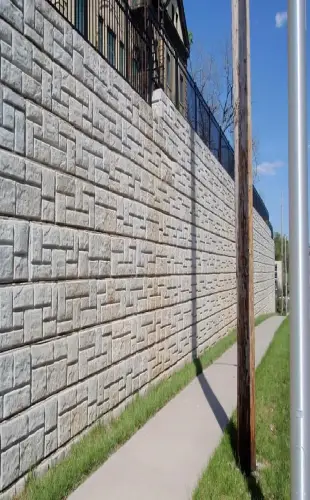
A well-proportioned retaining wall guarantees structural safety while effectively serving its functional purpose. At Garrett Precast, we offer high-quality retaining walls at budget-friendly prices. With years of experience supplying a wide range of concrete precast products, we have accumulated valuable insights to help our clients choose the perfect retaining wall height.
Why Height Matters
The taller a retaining wall is, the greater the lateral earth pressure it must withstand. Soil naturally exerts force against the wall, and this pressure increases with depth. For shorter walls under 3 to 4 feet, basic construction methods may be sufficient. However, once a wall exceeds this height, structural reinforcement and professional engineering become much more important.
In many areas, retaining walls over a certain height (often 4 feet) require building permits and engineered plans. This is because a failure in a taller wall can cause property damage, erosion, or even injury.
Soil Type and Load Pressure
Different soil types exert different levels of pressure on retaining walls. Clay soils, for example, retain water and can expand, placing additional stress on the structure. Sandy or granular soils drain more easily and create less hydrostatic pressure.
In addition to soil type, surcharge loads must be considered. These are extra forces placed on the retained soil, such as vehicles, driveways, patios, buildings, or heavy landscaping features. The presence of surcharge loads requires stronger materials and deeper foundations.
Foundation and Footing Requirements
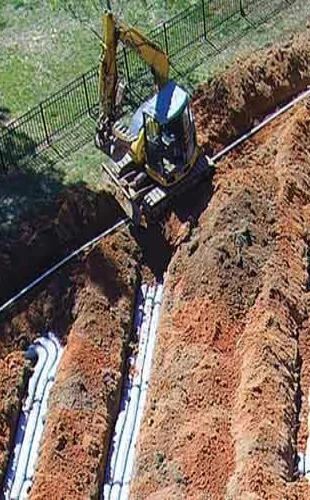
A stable foundation is essential, especially for taller retaining walls. The base must be excavated to stable soil and often includes a compacted gravel base or reinforced concrete footing.
For higher walls, the footing may need to extend deeper and wider to properly distribute weight and resist overturning or sliding. Poor foundation preparation is one of the most common causes of wall failure.
Drainage Is Critical
One of the biggest threats to retaining wall stability is water buildup behind the wall. Without proper drainage, hydrostatic pressure can increase, pushing the wall outward.
Effective drainage solutions include:
- Gravel backfill behind the wall
- Perforated drain pipes (French drains)
- Weep holes for water escape
- Proper grading to direct surface water away
Regardless of height, drainage should always be incorporated into the design.
Reinforcement and Materials
The material used for a retaining wall influences its structural requirements. Common materials include:
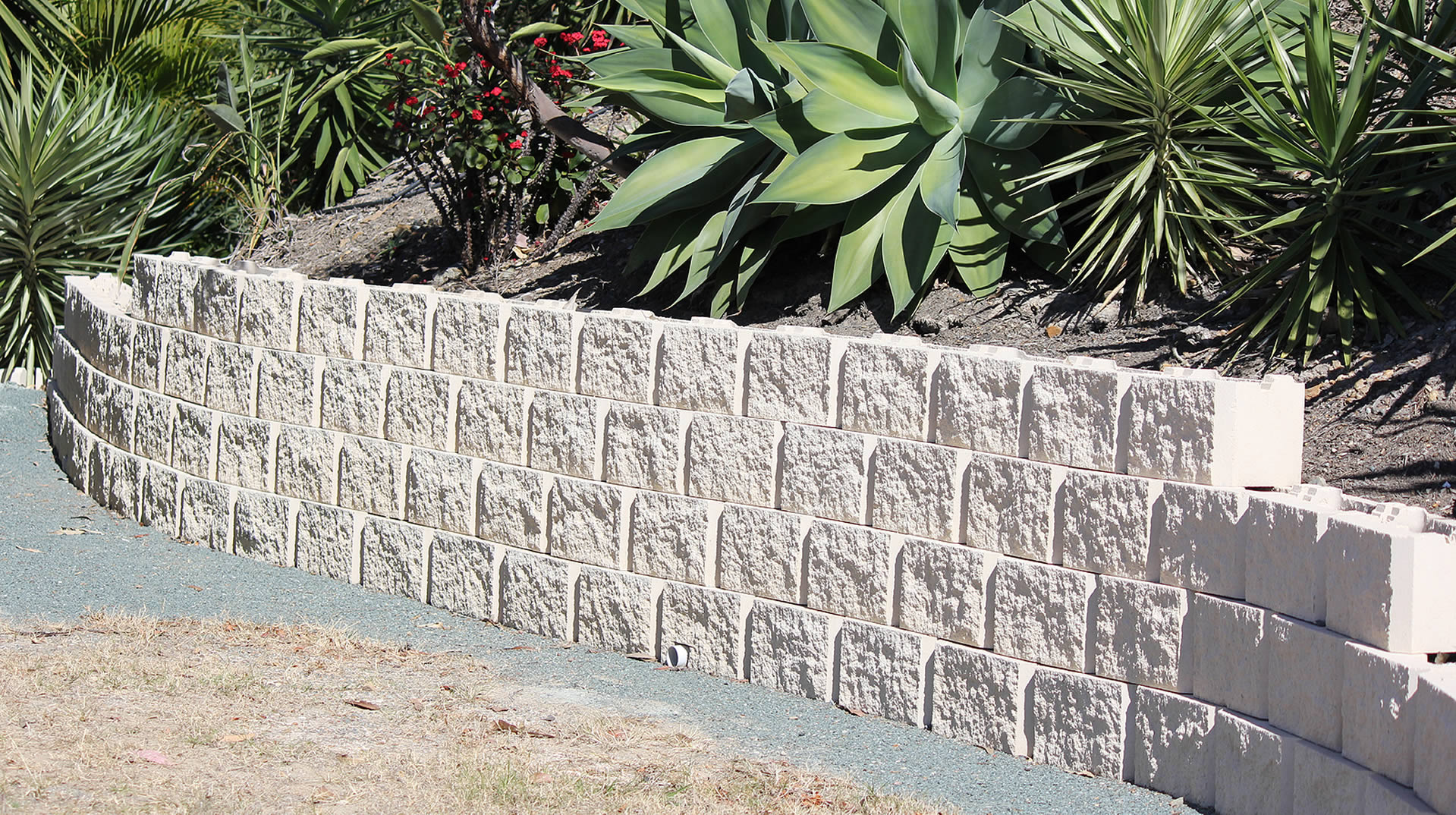
- Concrete blocks
- Poured concrete
- Natural stone
- Timber
- Reinforced masonry
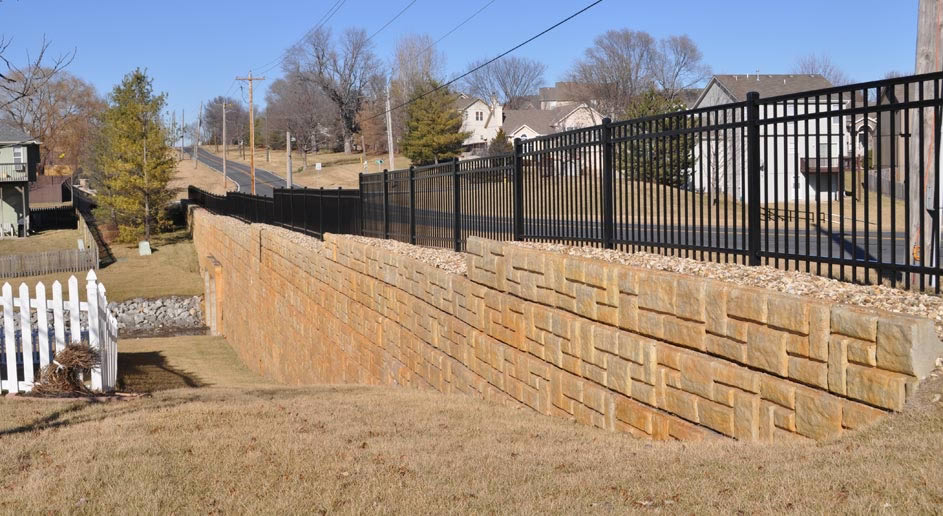
For walls above 4 feet, reinforcement such as geogrid layers, steel rebar, or tie-backs may be necessary. Geogrid reinforcement extends into the soil behind the wall, helping stabilize the entire mass of earth rather than relying solely on the wall’s weight. A trusted precast company can provide expert guidance on the best reinforcement material for retaining walls.
Safety and Engineering Considerations
As retaining wall height increases, professional design becomes more important. Engineers calculate soil pressure, load distribution, drainage requirements, and reinforcement spacing to ensure safety and longevity.
Improperly constructed tall retaining walls can lean, crack, bow outward, or collapse. Warning signs of structural issues include bulging sections, separation between blocks, soil erosion at the base, or significant cracking.
Contact Garrett Precast for Concrete Precast Products
Choosing the perfect height for your retaining walls and maintaining their structural integrity can help you make the most of the structure. As a trusted precast company, we’re here to guide you through the process of choosing the right retaining walls in Greenwood, SC for your needs. Let us help you achieve a functional retaining wall that serves the intended purpose. Call us today to place your order or learn more about the products we offer.